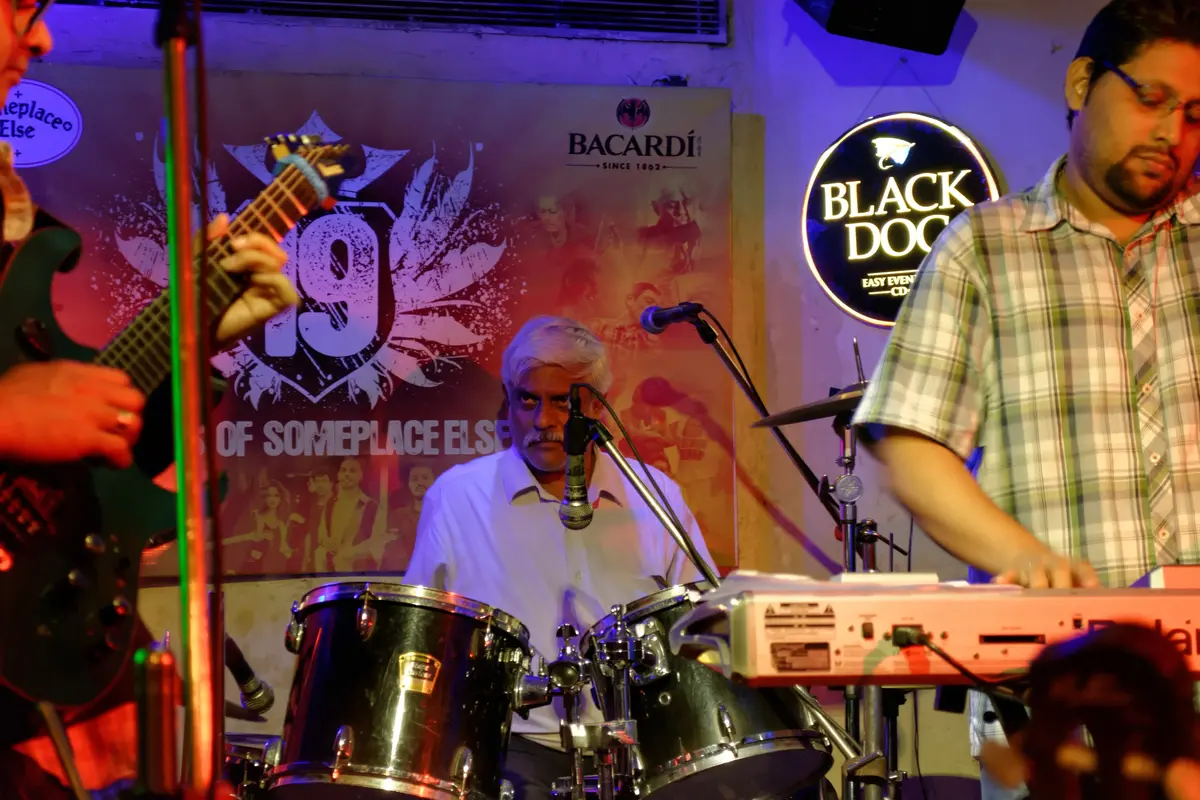
The lights on Park Street do not dim at ten. They sharpen. The air carries cigarette smoke and spilled lager, the low rumble of a guitar check from somewhere inside a hotel basement, the hiss of a taxi on wet pavement. Kolkata at night is not the city of marble and marigolds — it is looser, louder, more honest. And Park Street is where that honesty gathers, drink in hand, to wait for the music to start.
A Street That Was Inherited
Park Street was not built for Bengalis. Laid out in the late 18th century as a route connecting the European residential quarters to the South Park Street Cemetery, it grew into the social spine of colonial Calcutta. When Independence came and the English left, something unexpected happened: the street did not fade. It was inherited. Calcutta's Bengali professional class walked into those same dining rooms and ordered the same drinks and, over a generation, made the place entirely their own. The poshness remained. The gatekeeping changed.
Someplace Else & Broadway: Two Institutions
To understand what Park Street offers now, you begin underground. Someplace Else, tucked into the basement of The Park Hotel, is less a bar than an institution. The ceilings are low, the lighting amber, and the walls carry the memory of every band that has ever played there — which is to say, most bands worth hearing in India over the last three decades. On a good night, you are pressed shoulder-to-shoulder, the room hot and moving as one.
Then there is Broadway Bar and Restaurant, which is something else entirely. The bentwood chairs, the whirring fans, the waiters who have been there long enough to remember your grandfather's order: Broadway is a place Kolkatans go when they want to feel held by the city rather than entertained by it. The menu is honest Anglo-Indian — devilled kidneys, mutton cutlets — and the beer is cold. There is no music, and that is precisely the point.
Adda can last four hours over two beers. It produced, over the years, an entire ecosystem of literature, cinema, and music.
The Music Scene That Keeps Itself Alive
Kolkata's alternative music scene is, in an economic sense, kept alive by live-music bars. A band plays a residency at a venue; the venue stays open because of that residency; the musicians pay their rent because of the gate. The scene has produced genuinely original work — Bengali rock, fusion, post-punk with Rabindrasangeet underneath it. When a venue closes, a band loses its room. When a band breaks up, a venue loses its crowd. It is a fragile ecosystem, and it is still functioning.
Kolkata's nightlife is not without its tensions. The city has historically kept early closing hours by Indian metro standards. The old bars simply know how to wait. They have been navigating the gap between what the law says and what the city needs for seventy years.
What stays with you, leaving Park Street at some late hour, is not the drinks or the noise. It is the sense of continuity — that the city has always made room for this. Kolkata's nightlife is not glamorous in the way the word usually implies. It is better than that. It is genuinely lived in.
North Kolkata by day, South Kolkata by evening — our two-day tour crosses the full city.
See the 2-Day Tour →