
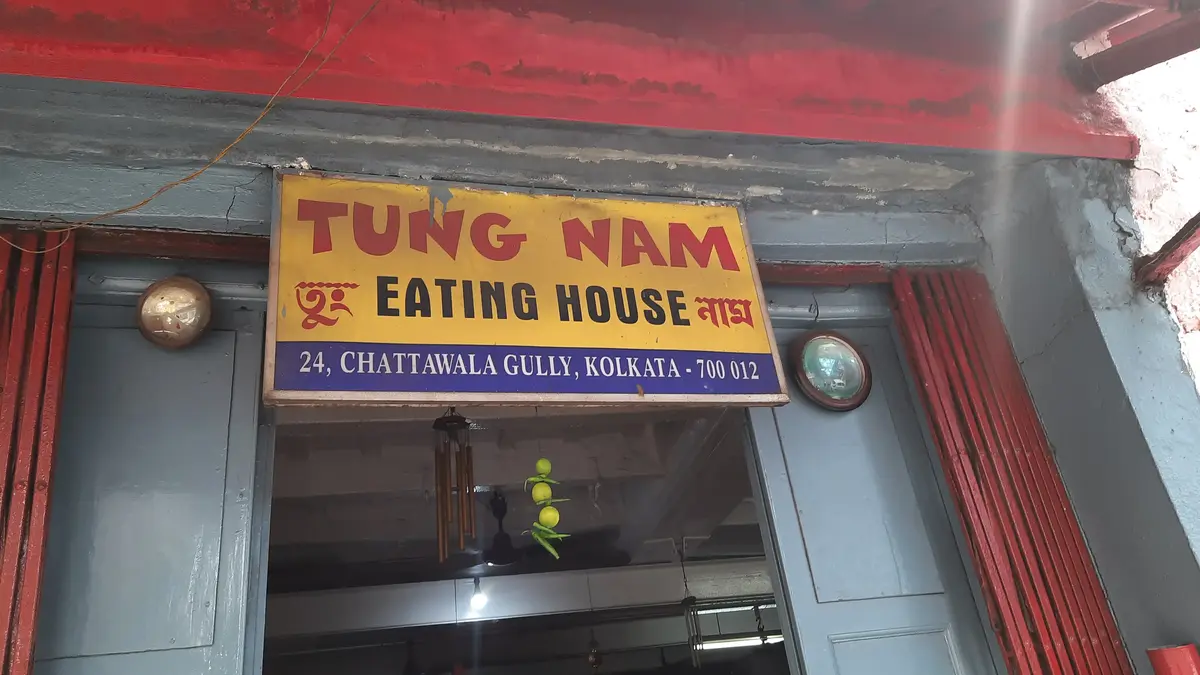
By the time the first batch of dumplings is lifted off the steamer in Tiretta Bazaar, someone is already asking what's left. A few kilometres away in Tangra, a kitchen has been working since dawn—less visible, but no less active. Two neighbourhoods, moving at different speeds, but tied together by the same habit.
How the Chinese Came to Calcutta
The story begins in the late 18th century with Tong Achew, a trader who set up a sugar mill near Budge Budge. The venture did not last, but others followed. By the early 1800s, Chinese migrants—Hakka, Cantonese, and Hubeinese—had begun settling in Calcutta, bringing trades that required patience and skill: carpentry, dentistry, shoemaking.
Over time, work began to shape geography. Tanneries needed land and water, and by the early 20th century many Chinese families had moved eastward to Tangra. What started as a practical relocation slowly turned into a second centre of life—separate from the older settlement near Bowbazar, but deeply connected to it.
Two Chinatowns, Two Rhythms
The older Chinatown around Tiretta Bazaar remains close to the city's historic commercial core. Narrow lanes, old temples, and early-morning food define it. By contrast, Tangra—often called the new Chinatown—grew around industry and later expanded into something else entirely: a dense cluster of kitchens, restaurants, and family-run food businesses.
The difference is not just spatial, but temporal. Tiretta Bazaar belongs to the morning. Tangra belongs to the afternoon and night. Yet both continue to hold pieces of the same story—migration, adjustment, and the slow building of routine.
What Continues in the Background
Tiretta Bazaar's breakfast is better known, but it is not the only one. In Tangra, early cooking still happens—inside kitchens rather than on the street. It is less visible, more internal to the community, but it follows the same logic: fresh, quick, and built around what the day will demand.
Kolkata didn't just adopt Chinese food—it absorbed it slowly, until it became part of the city's default taste.
From Community Kitchens to City Habit
As Chinese families began cooking for people outside their own community, the food shifted. Ingredients were adjusted, flavours recalibrated. Soy sauce met green chilli. Gravies became thicker, designed to work with rice. What emerged was not traditional Chinese food, but something rooted in Kolkata—what we now call Indo-Chinese.
Restaurants in Tangra's Topsia area played a large role in this transition. Established family-run places—some operating for decades—created menus that could be reproduced and recognised. These were not experimental kitchens; they were stable, consistent, and influential. From here, dishes travelled outward into the rest of the city.
- Chilli chicken adapted for rice-based meals
- Fried rice with local seasoning and higher heat
- Schezwan sauces adjusted to suit Kolkata's spice preference
- Manchurian dishes developed entirely within India
A Temple, A Habit, A City
In Tangra, not far from the restaurants and former tannery spaces, stands a small but telling structure—the Chinese Kali Temple. It does not draw attention to itself, but it reflects something essential about the community.
Here, Chinese families offer prayers to a Hindu goddess. Alongside incense and fruit, plates of noodles or rice are sometimes placed as offerings. It is not a spectacle. It is routine—another example of how the community adapted without fully letting go of its own identity.
This blending extends beyond religion. It appears in language, in food, in everyday habits. Over generations, the lines did not disappear, but they softened enough to allow something new to take shape.
Tiretta Bazaar's breakfast and Tangra's kitchens sit inside a city worth knowing in full — on a private two-day tour.
See the 2-Day Tour →