By late December afternoon, someone has already strung fairy lights across the balconies, and a faint smell of baking drifts into the courtyard. A speaker crackles to life with an old carol. Children run across the central square, weaving between plastic chairs that will be filled by evening.
A Barracks That Became a Home
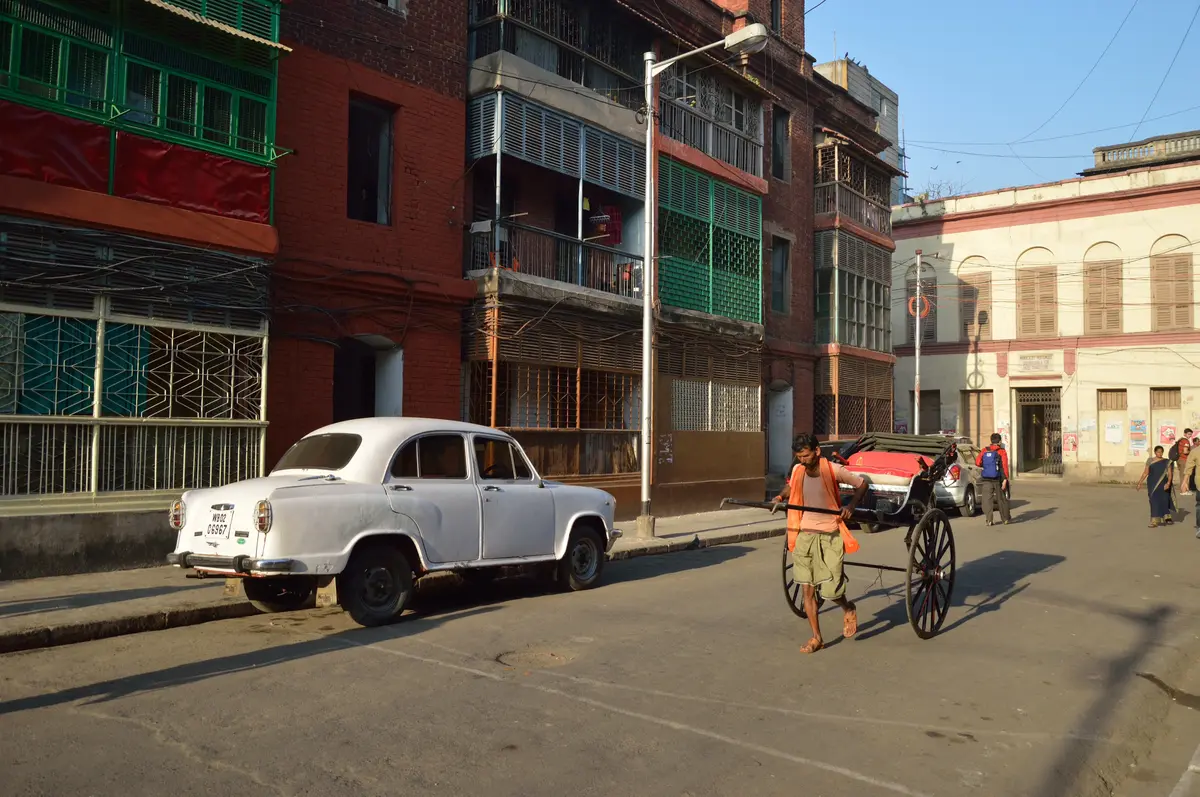
Bow Barracks was never meant to be a neighbourhood. Built during the First World War as military housing, the red brick blocks stood functional and impersonal, tucked behind Bow Bazaar. When the soldiers left, the structures remained—empty, waiting for a different kind of life to take shape.
Anglo-Indian families moved in gradually, many of them working in railways and clerical services. Over time, the barracks shifted from temporary housing into something far more rooted. Six blocks of three-storeyed buildings enclosed a shared courtyard, where daily life unfolded in full view—conversations across balconies, recipes passed between kitchens, and a sense of familiarity built through proximity.
Bow Barracks was never planned as a community, but it became one through habit, proximity, and shared memory.
What Remains of Anglo-Indian Kolkata
There was a time when the Anglo-Indian presence in Kolkata was more visible—through schools, railway colonies, and social clubs. Over the decades, many families left the city, especially after Independence. What remains today is smaller, quieter, but still intact in certain pockets like Bow Barracks.
Around 132 families still live here, many of them Anglo-Indian, though the neighbourhood has become more mixed over time. The buildings are worn, the paint fading, but the structure of daily life hasn't disappeared. Laundry hangs across corridors. Radios play from inside rooms. Someone always seems to be watching the courtyard from above.
December, When the Courtyard Fills Again
For most of the year, Bow Barracks feels almost withdrawn. But in December, it opens up. Christmas is not confined to a single day—it builds slowly. Lights appear first, then music, then people. Former residents return if they can. Visitors arrive, drawn by something they've heard or seen before.
Food anchors this shift. Cakes, wine, and home-cooked dishes move between households. Many residents begin preparing their homemade wines months in advance—ginger, grape, sometimes cherry—using recipes passed down through generations. By December, bottles line kitchen shelves, waiting to be shared or sold.
- Homemade ginger and grape wine, often fermented for months
- Fruit cakes baked in batches across the neighbourhood
- Plastic cups passed between neighbours and visitors
- Music that shifts between carols and old favourites
J. N. Barua's and the Taste of a Local Christmas
A few steps from the barracks, on Robert Street, J. N. Barua's bakery has been part of this seasonal rhythm for decades. Founded during the late colonial period, it grew into a neighbourhood fixture, especially for families living around Bow Barracks.
The shop is still modest—easy to miss if you're not looking for it. But in December, the line outside tells you everything. Fruit cakes, wine cakes, and the distinctly local chhanar cake are prepared in limited batches, with demand rising sharply in the days leading up to Christmas.
It's not just about buying a cake. For many, this is where Christmas begins. Some families still bring their own mixtures to be baked in the shop's ovens, continuing a practice that predates modern bakeries. Others return every year for the same flavours, unchanged over time.
A Celebration That Isn't a Performance
It's easy to mistake Bow Barracks during Christmas for an event. There are lights, music, and growing crowds. But for residents, this is continuity, not spectacle. The decorations are not designed for an audience—they are part of a rhythm that has repeated for decades.
Visitors are welcome, but there is an unspoken understanding. The balconies are not backdrops. The courtyard is not a stage. The celebration works best when you approach it quietly—when you stand, watch, maybe accept a cup of wine, and recognise that you are inside someone else's memory as much as their present.
Kolkata holds communities like this one in its lanes — discover them on a private guided tour built around the city's actual life.
Explore Kolkata →