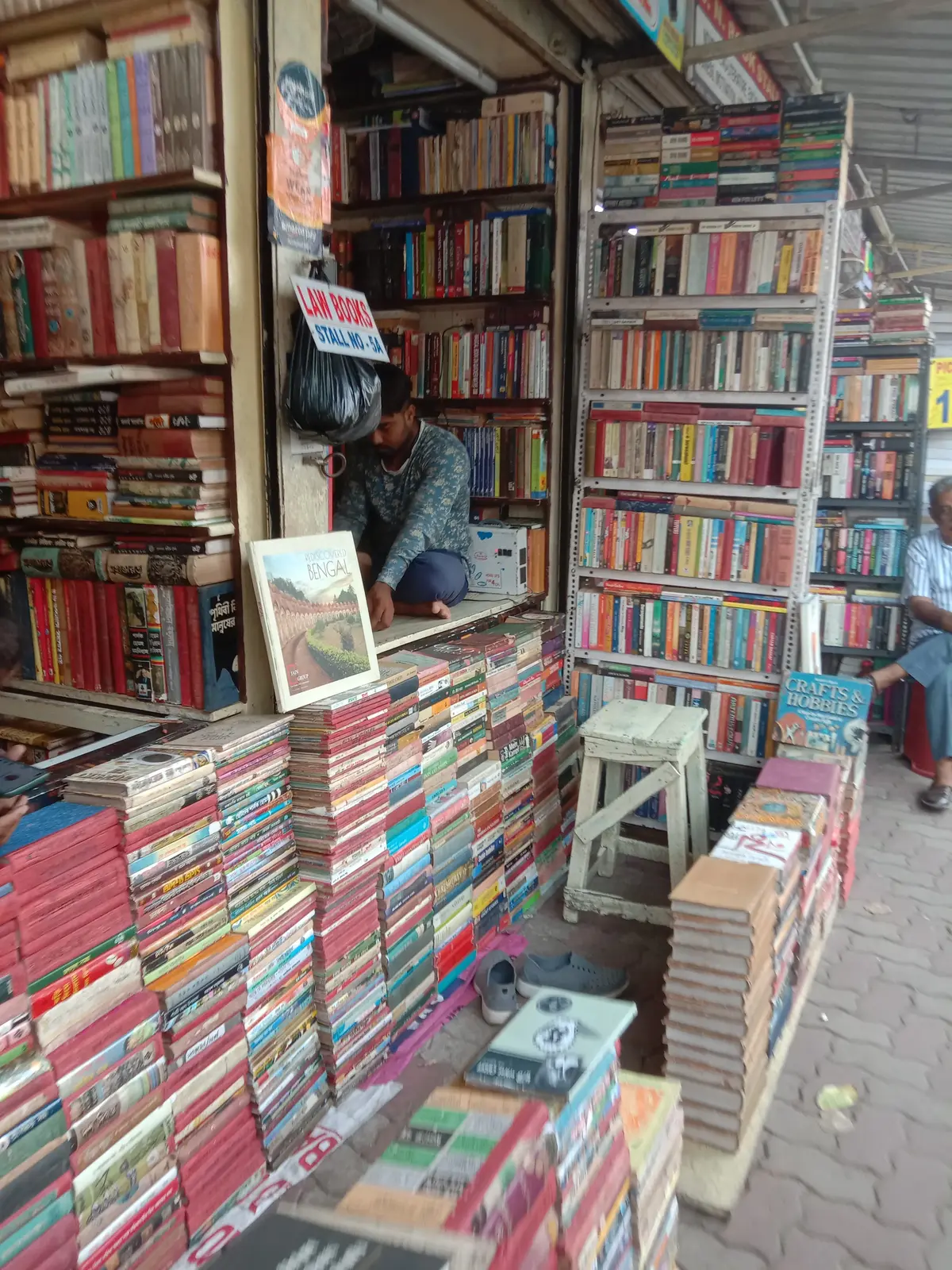
The smell arrives before anything else: old paper, bamboo, a faint sweetness from a kochuri stall that has been frying since before the city woke up. College Street on a weekday morning is already transacting. Vendors have spread their stock across the pavement — engineering textbooks stacked beside pre-Partition poetry collections, paperback philosophy wedged against a water-stained Bangla detective novel from the 1960s. This is Boi Para — Book Town — and it has been at this since before anyone now living can remember.
A Street Born from a Scottish Watchmaker
The street owes its character to David Hare, who arrived in Calcutta in 1800, gave up his watchmaking trade, and devoted himself to education — founding Hindu College in 1817 and the School Book Society, which printed and distributed textbooks in Bengali and English. Presidency University, Sanskrit College (1824), Calcutta Medical College (1835), and the University of Calcutta (1857) eventually clustered within a few hundred metres of each other. Where students congregate in such density, a book trade follows. Das Gupta & Co, the market's oldest surviving bookshop, was established in 1886.
Browsing at Boi Para Speed
To browse Boi Para properly you must slow down to its speed, which is slower than the rest of Kolkata and considerably slower than the rest of the world. A vendor will lift a book from a stack without being asked, having already read your expression. Prices are negotiable — a standard textbook changes hands for less than a cup of coffee costs in most Western cities. The rarer finds surface without warning: a signed poetry collection, a 1950s illustrated children's book, a pre-Independence gazette.
The street has appeared in Bengali cinema and fiction as shorthand for intellectual aspiration — the place a young person goes not just to acquire books but to become the kind of person who reads them.
Every educated Kolkatan has a College Street story. The Bengali literary tradition — Bankimchandra, Tagore, Bibhutibhushan, Sunil Gangopadhyay — is physically present on these stalls. Rupa & Co, established here in 1936, had its logo designed by Satyajit Ray.
The Indian Coffee House
The experience of Boi Para cannot be separated from its food, or from its arguments. The Indian Coffee House, operating since the early 1940s and now run by a workers' cooperative, is the city's most storied argument-room: a high-ceilinged hall where students, writers, and political figures have gathered for adda over milky coffee and buttered toast. Manna Dey made the Coffee House the subject of one of Bengal's most beloved songs — an elegy for conversations that time and change have ended.
There is a quality to Boi Para that resists easy summation: the sense of entering a city's memory while it is still in use. The books on these stalls are not preserved under glass — they are read, resold, annotated, lost, and found again by someone who did not know they were looking. A city that takes books this seriously is telling you something about itself. Whether or not you buy anything, you leave knowing what it is.
College Street is on our North Kolkata morning — books, kochuri, and the Indian Coffee House, with a guide who grew up here.
See the Full Itinerary →